
Plastic surgery
Buccal fat removal
Buccal fat removal reduces selected deep cheek fat through incisions inside the mouth.

At a glance
Buccal fat removal in Lahore
Buccal fat removal is assessed at Laforma Hospital through an individual, consultation-led pathway. The page below explains what the treatment may address, how suitability and technique are decided, recovery, material risks and alternatives.
For a personal recommendation, Dr Farrukh Aslam must review the concern, relevant health history and realistic goals. Online information cannot confirm diagnosis, availability or suitability.
Common starting points
What brings patients to us
Shape, proportion or symmetry
Patients may seek assessment for lower-cheek fullness, but the concern and desired change should be described in your own words.
Function or physical symptoms
Examination helps distinguish appearance, symptoms, anatomy and tissue characteristics that may require different options.
Ageing, injury or previous treatment
Previous procedures, injuries, health conditions and future plans can change suitability, technique and expected outcome.
Overview
Understanding Buccal fat removal
Buccal fat removal reduces selected deep cheek fat through incisions inside the mouth.
Facial planning considers the feature in relation to the whole face, with realistic limits and preservation of function.
This page is an informed starting point, not a diagnosis or a recommendation. The indication, achievable change and whether surgery is appropriate can only be established after consultation.
Possible objectives
Define the purpose before the plan
The change
Clarify what you would like to address and why it matters to you.
The priorities
Discuss appearance, function, comfort, scars, sensation and recovery in the order that matters to you.
The limits
Understand what the procedure can reasonably change, what it cannot guarantee and which alternatives remain available.
Consultation & suitability
The decision starts before the treatment room
A consultation should give you enough detail to make an informed choice without pressure and without promising a particular result.
Describe the concern, the outcome that would feel worthwhile and any result you would not accept.
Review facial proportions, skin and soft tissue, function, symptoms, previous treatment, scars and the relationship between the treatment area and surrounding features.
Compare the proposed operation, alternatives, limitations, scars or treatment effects, setting, recovery and costs.
Review material risks, follow-up, what happens if the plan changes and who to contact before deciding.
Treatment approach
The technique follows the assessment
The surgeon assesses facial structure, age-related volume change and whether reducing this fat could create an overly hollow appearance over time.
The treating surgeon should explain the proposed steps, why that approach is recommended and what findings could change or postpone the plan.
Technique
Selected for the anatomy, treatment goal and evidence—not as a menu to self-select.
Extent
The number of areas, degree of change and whether care is combined or staged affect safety and recovery.
Setting
Facility, anaesthesia or pain control, equipment and clinical support should match the proposed plan.
Your treatment journey
Clear steps, coordinated care
Your exact pathway is individual. This overview shows how assessment, preparation, treatment and follow-up connect.
Goals, health, relevant anatomy and alternatives are assessed.
Technique, limitations, risks, costs and aftercare are explained.
Instructions, medicines, transport, support and facility arrangements are confirmed.
The agreed operation is performed in the planned clinical setting.
Healing, symptoms, response and progress are monitored.
Recovery & aftercare
Healing is individual
Recovery depends on the extent of surgery, pain control or anaesthesia, your health and how your body responds. Your treating team should provide a personal plan covering wound or skin care, medicines, activity, work, exercise, follow-up and urgent contact advice.
Protect and monitor
Follow written instructions, use prescribed medicines and contact the team about unexpected or worsening symptoms.
Assess the response
Dressings, wounds, swelling, comfort or treatment response are reviewed at the intervals set by your clinician.
Return gradually
Work, driving, exercise, garments, skincare and normal routines resume according to your individual plan.
Judge results responsibly
Final assessment waits for the relevant swelling, healing, tissue settling or treatment cycle to progress.
Results & expectations
Real outcomes need clinical context
A useful consultation defines the change that may be achievable as well as what surgery cannot reliably deliver. Results and longevity vary with anatomy, healing, ageing, weight, hormones, health, lifestyle and the exact treatment plan.
Where appropriate and consent permits, comparable clinical cases can help explain variation. They should never be used to promise an identical outcome.
Risks & considerations
Understand the trade-offs before consent
Considerations include asymmetry, infection, nerve or salivary-duct injury, contour change and excessive hollowing.
Other relevant considerations may include:
- bleeding or haematoma
- infection
- scarring
- pain or altered sensation
- asymmetry or an outcome that differs from expectations
- anaesthetic and blood-clot risks
- the possibility of additional treatment or revision
This is not an exhaustive consent list. The treating surgeon must explain risks specific to the plan, your health, the product or device where relevant, and the setting in which care would take place.
Cost & quotation
What affects the cost
Laforma does not publish fixed prices for buccal fat removal. A surgical quotation follows clinical assessment and may reflect the operative plan, surgeon and anaesthesia requirements, theatre and hospital resources, implants or devices where relevant, investigations, aftercare and follow-up. Grades, graft counts and operative variants are planning variables—not separate treatment pages.
Your consultation should explain what is included, which possible additional costs may arise and what follow-up is covered before you decide.
Alternatives & related care
Compare the right options
The appropriate alternative may be no treatment, further investigation, observation, a non-surgical option or a different operation. The comparison depends on diagnosis, anatomy, expected benefit, risk and recovery.
Frequently asked questions
Before you decide
How much does Buccal fat removal cost in Lahore?
Laforma does not publish fixed prices for buccal fat removal. A surgical quotation follows clinical assessment and may reflect the operative plan, surgeon and anaesthesia requirements, theatre and hospital resources, implants or devices where relevant, investigations, aftercare and follow-up. Grades, graft counts and operative variants are planning variables—not separate treatment pages.
Which specialist provides Buccal fat removal at Laforma?
Dr Farrukh Aslam is assigned to this pathway. The final clinician allocation depends on the exact concern, availability and whether another specialty is more appropriate.
Can I choose a package, dose, number of grafts or technique online?
No. These are plan variables determined after assessment; they do not represent separate diagnoses or guaranteed packages.
How do I know whether Buccal fat removal is suitable for me?
Suitability depends on the concern, anatomy or tissue characteristics, health, expectations, evidence and alternatives. An assessment with the surgeon is required before a recommendation can be made.
What should I ask during consultation?
Ask about the clinician’s relevant qualifications and experience, the exact technique or protocol, facility, common and serious complications, alternatives, aftercare, costs and what happens if you need further treatment.
Will consultation commit me to treatment?
No. Consultation is for assessment and informed decision-making. You should have time to consider the proposed benefits, limitations, risks, costs and aftercare before choosing whether to proceed.
How long will recovery take?
There is no single reliable timeline for every patient. Your clinician should provide a personal plan covering the early phase, work, driving, exercise, follow-up and when the result can be meaningfully assessed.
Are results guaranteed?
No. A responsible plan explains a range of possible outcomes and the factors that may affect them. Images or another patient’s experience cannot predict your result.
Who will provide my care?
Laforma should match the procedure and concern to an appropriately qualified clinician. Confirm who will assess, treat and review you, and ask about their procedure-specific training and experience.
Results & follow-up
How outcomes are assessed
A meaningful outcome is considered in context: your starting concern, the agreed treatment plan, recovery and review over time.

Assigned specialists
Your clinical team
Professor Dr. Farukh Aslam Khalid is the assigned specialist for surgical consultations for this treatment.

Your care at Laforma
Specialist-led care in a licensed hospital
Your consultation is matched to the appropriately qualified clinician for the concern and treatment being considered.
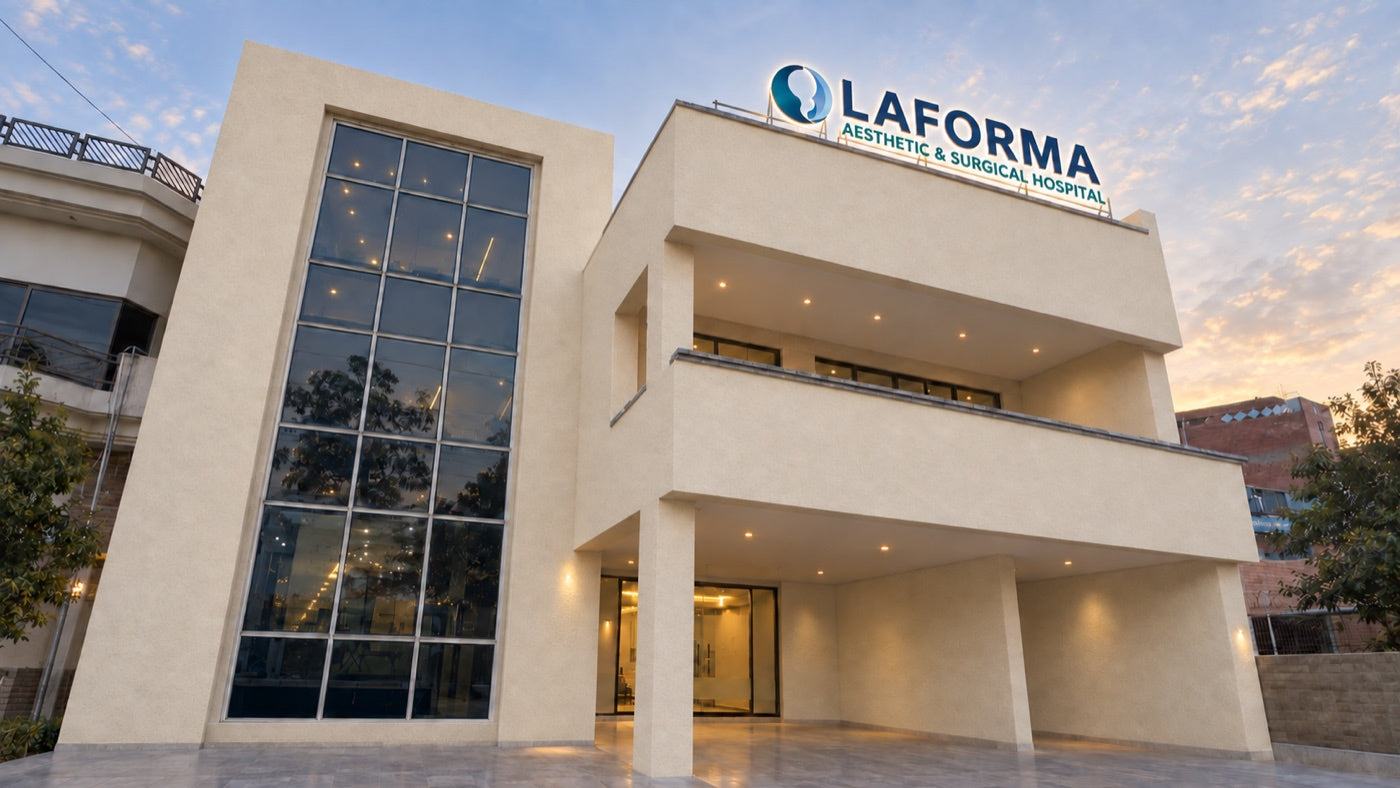
Laforma’s state-of-the-art facilities support consultation, treatment and follow-up within one coordinated hospital pathway.
Explore our facility Meet our specialistsYour next step
Start with a conversation, not a commitment
Request a consultation to discuss your concerns, suitability and the questions that matter to you.
Request a consultation